
modeling
I took the general ideas for little cloud’s form factor from log entry #2 and implemented them in Onshape. The construction is pretty basic. Because we get lots of symmetry in a 1U rack-mountable box, we start by sketching out a quarter of both the inner and outer shells. We then flange from each towards the opposite plate.
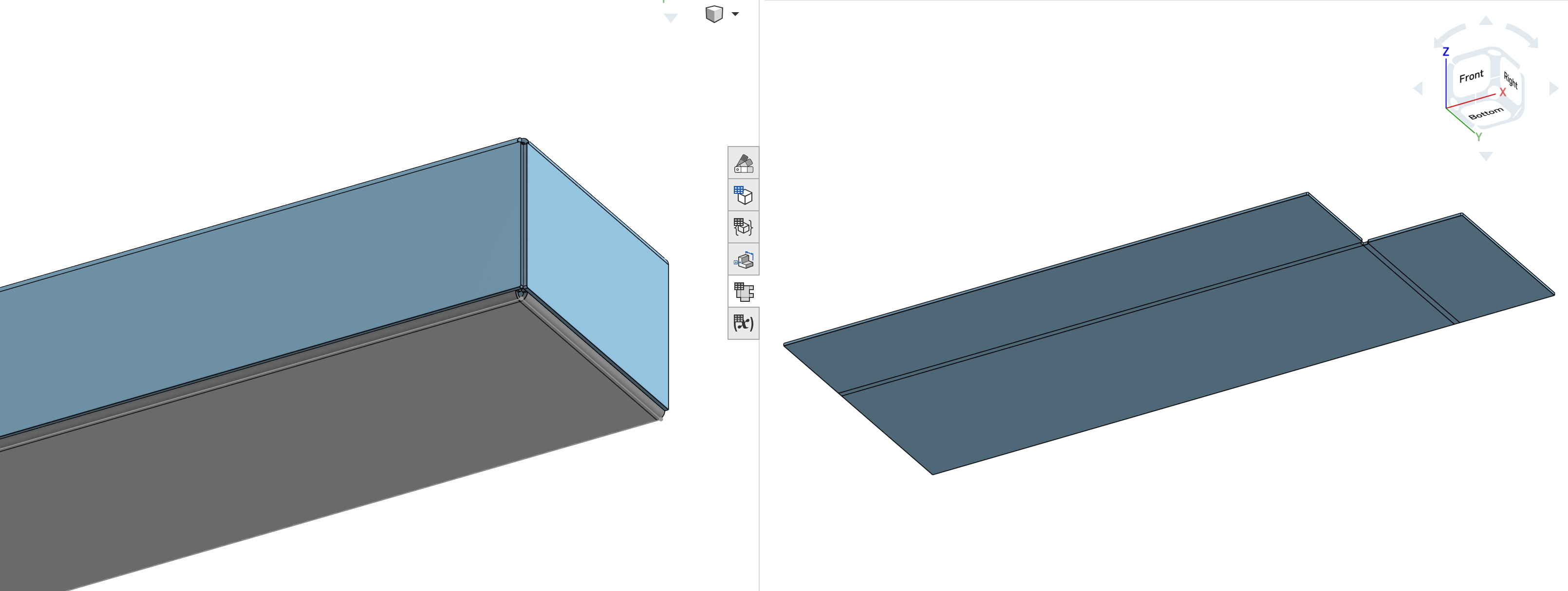
Then, create mounting holes on the short and long sides. Also, we can remove material from the bends themselves, following the “fold it yourself” idea from a few weeks back.
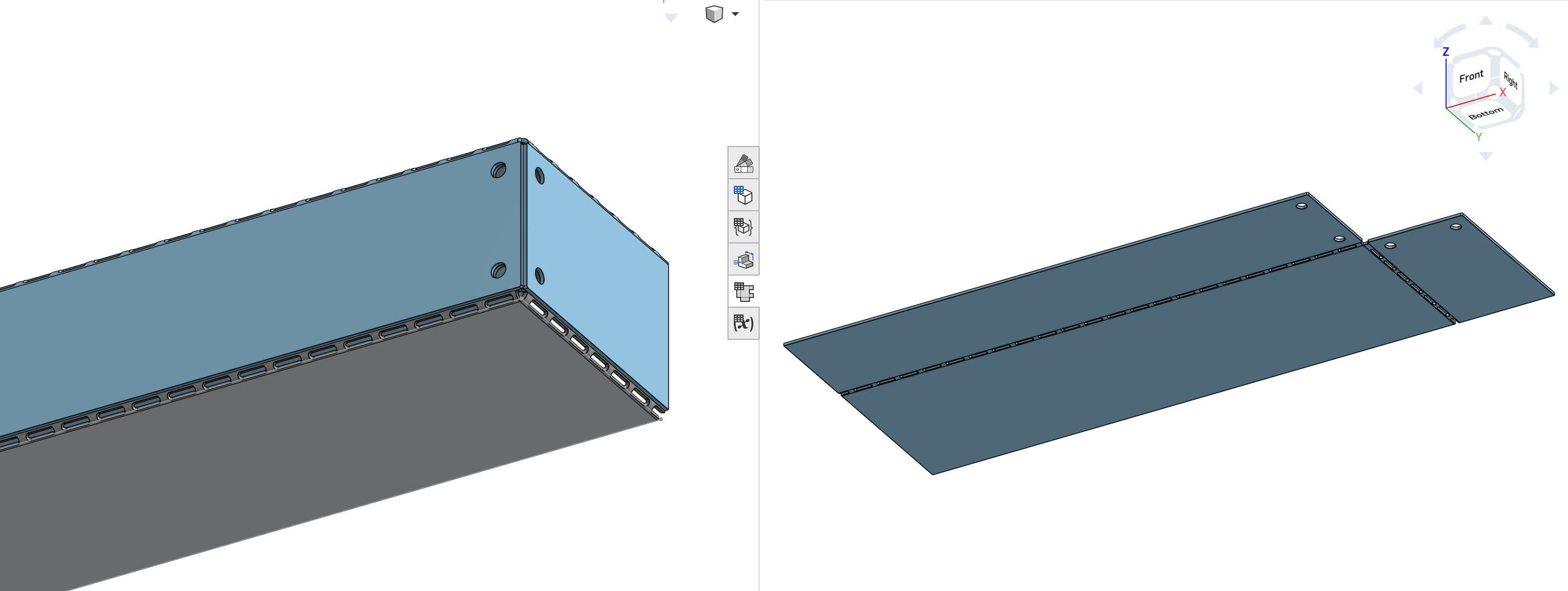
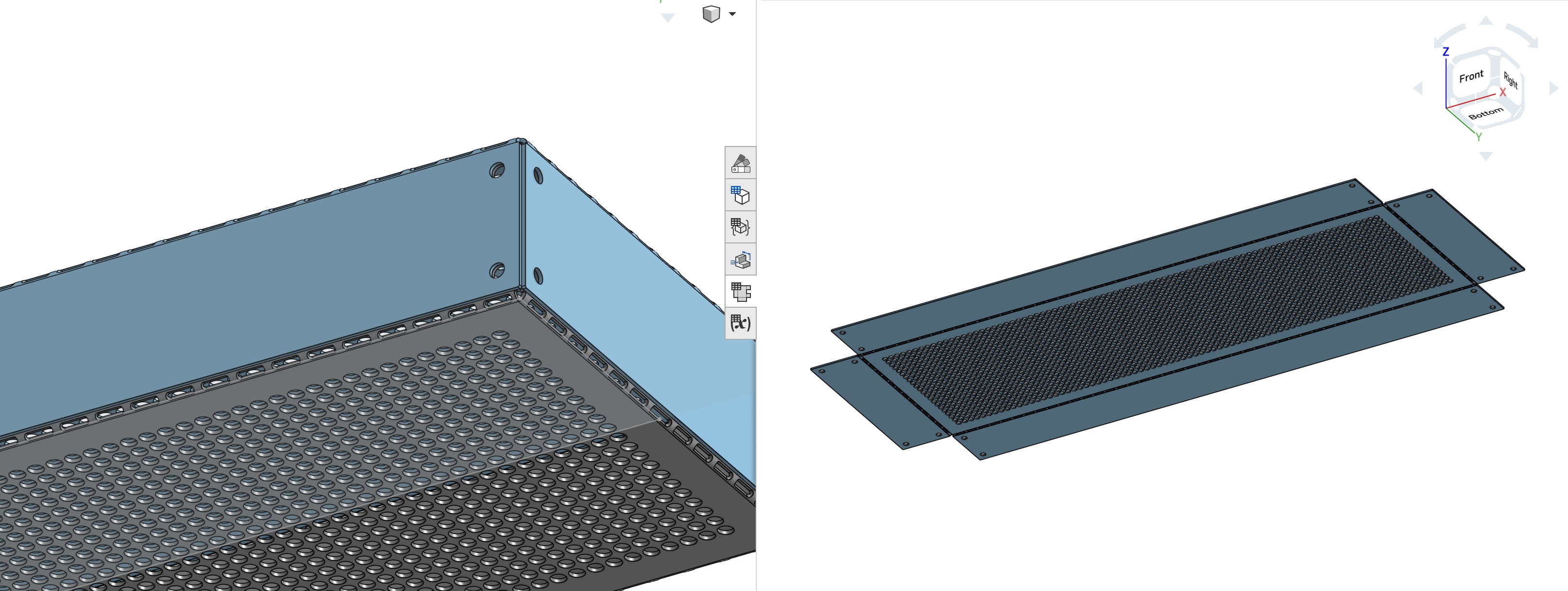
Then, mirror both inner and outer shells across the two base axes to get the actual clamshell box. Finally, create a through-all hole and pattern it linearly across the same axes to implement the modular mounting interface idea.
simpler
After seeing it take shape and bouncing ideas off of others, I decided to push for modifications related to the grill, supports, and size. When it comes to the grill, I realized that sheet metal costs are partially a function of the perimeter length of all cuts. A grill with a gazillion holes takes a toolhead more to cut out, keeping it busy instead of fulfilling other jobs. Also, even if punctured by a lot of holes, the grill’s remaining material might still pose resistance to the fans, reducing the volume of air they manage to move around worker devices per unit time. So we’ll go for a basic large hole instead.
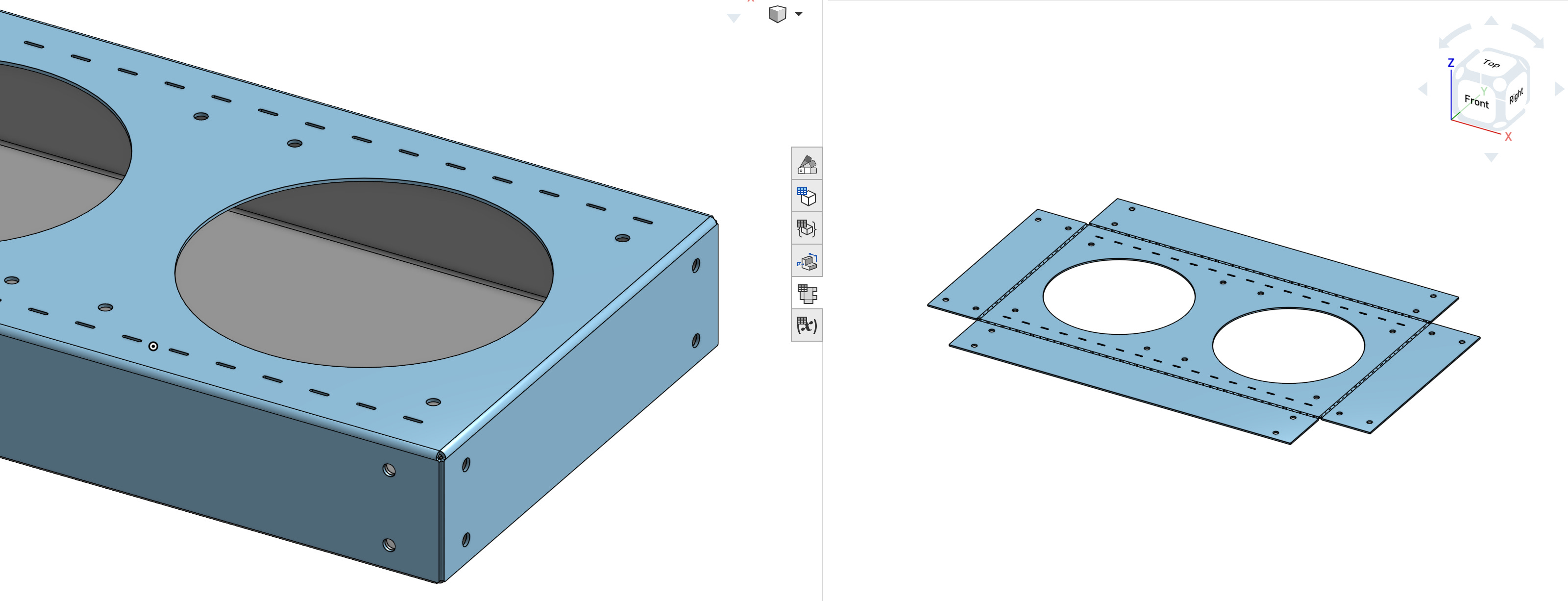
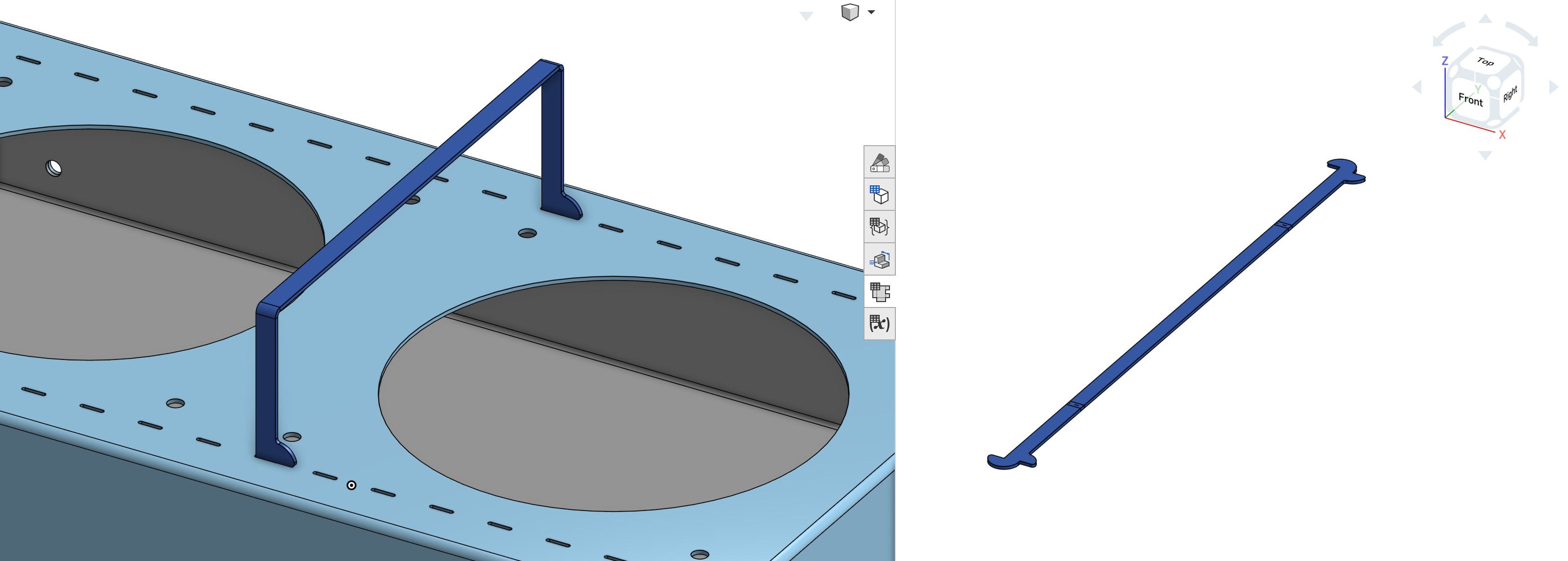
When it comes to the supports, I realized that it would be simpler to get hold of them through the same manufacturing process as the enclosure itself. We might as well just build them out of sheet metal while we’re at it, consolidating our supply chain. I played around with a few possible geometries, some requiring more material and bends than others, some requiring additional screws for mounting. I quite like the simplest one, two bends and no screws required. Instead, it seems to allow worker devices to securely rest on one side because of its bottom geometry and how it interacts with the enclosure. Move it around in your head.
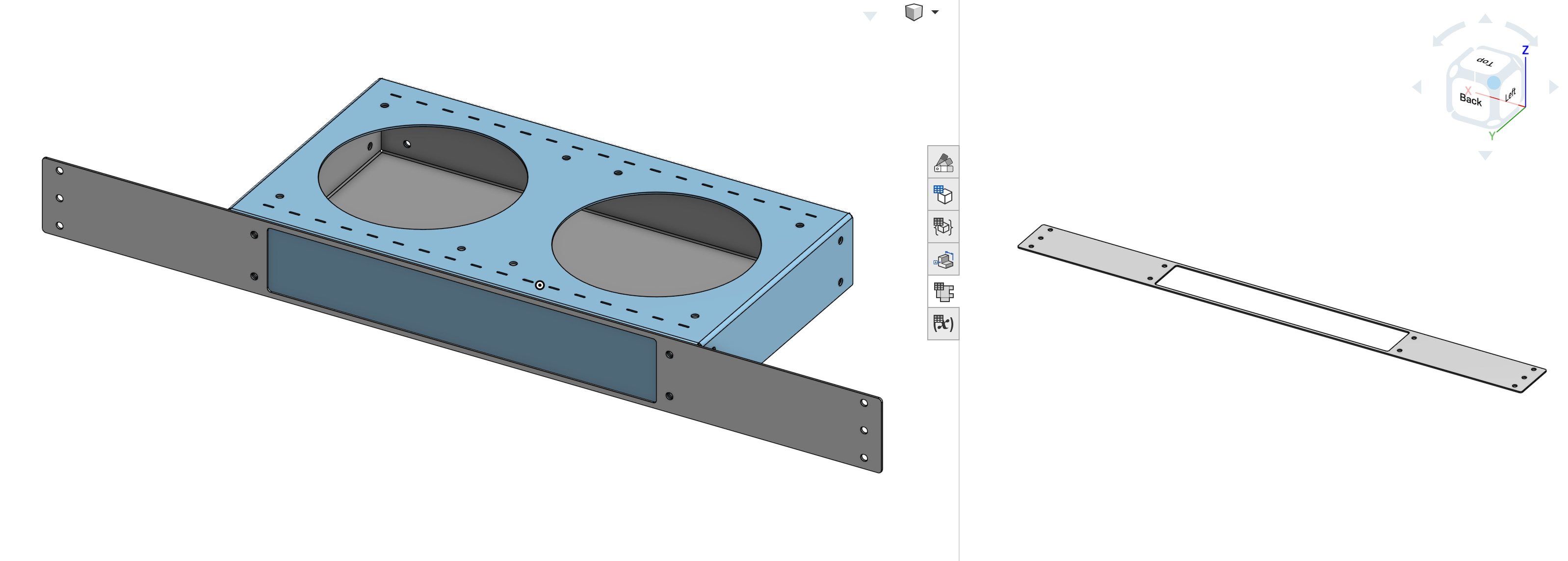
When it comes to size, I realized we can maintain server rack compatibility while making the enclosure smaller. A smaller enclosure appears more manageable for end-users, more in line with household e-waste statistics, and of course it would cost a bit less. We can then recover the rack-mountable property through a separate face plate that attaches to both the enclosure and the server rack, but only if needed. For lack of a more principled constraint, I then opted for the general size of “fits two standard fans side-by-side” for the main enclosure.
quote
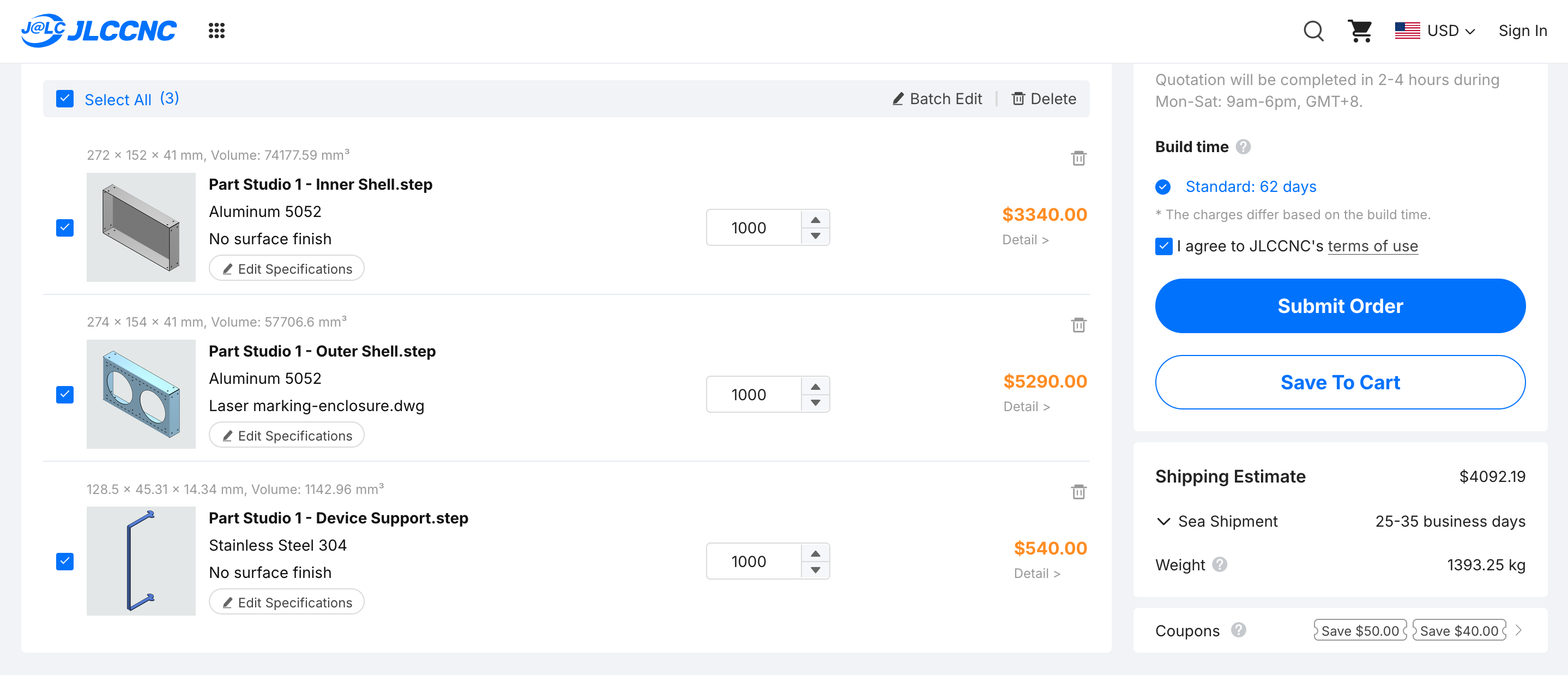
I was curious to run the current 3D models through JLCCNC for an instant quote at 1K volume. If we go for 1mm aluminum for the shells, we get a bit over 3$ per shell. Opting to laser-engrave the outer shell as a finish gets us instead to 5$. That finish seems cheaper, more durable, and more recyclable than layering silkscreen paint on the enclosure, and it would be neat to be able to make the device explain itself through labels and visual cues. The supports would be a bit over 0.5$ per piece, perhaps these could be stainless steel. The cheapest delivery option is in the same ballpark as the shells, but it would take forever to arrive. I signed up for a course on operating the CNCs at a local makerspace to be able to prototype faster. I’ll share how that goes in a future update.
simplest
Then I thought, what if the case would just be the bare PCB and a top cover on standoff spacers? It seems there’s no hard regulatory requirement for a box to explicitly be enclosed on all sides. The PCB would match the footprint of a flat metal sheet sitting above it on 4-6 standoffs. The sheet would retain the fan cut-outs and support mounts. Though, if we use standoffs, we might as well use them as supports, too.
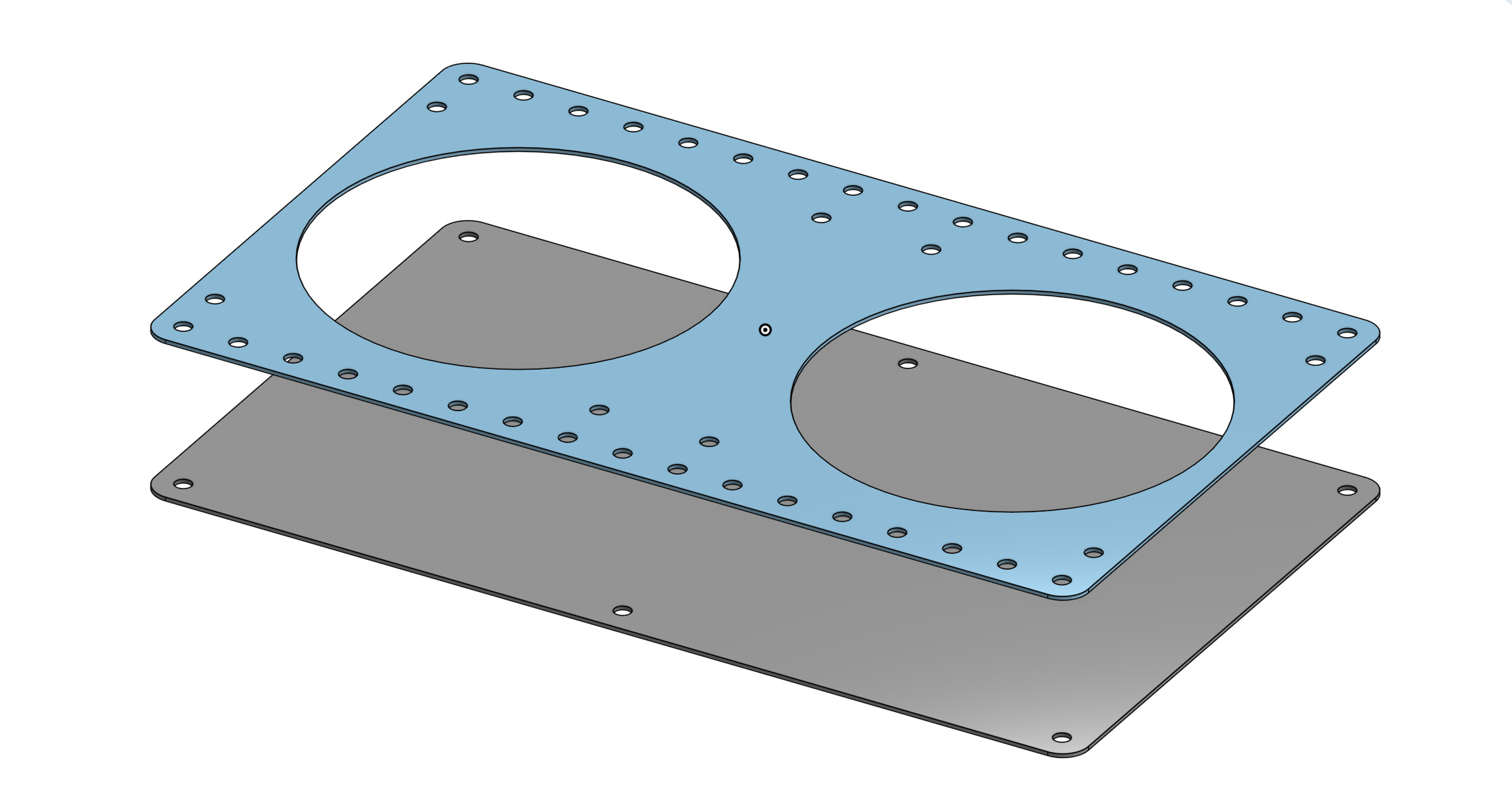
I’d rather have the whole arrangement be incredibly cheap than feel premium, given it’s intended for reviving e-waste. Running the only metal plate through JLCCNC, we get an instant quote of about 1.5$ at 1K volume for no finish. The 4-layer PCB with the same outer dimensions is a bit pricier at around 4$, but I think it would still be cheaper than a smaller PCB combined with an extra metal plate on the bottom and more stand-offs involved. Same rack-mountable face plate adaptation as above, but hugging the top and bottom sides with some tiny flanges instead.
