bays
These first few log entries will continue to break down the concept of a device that turns your old devices into a personal cloud.
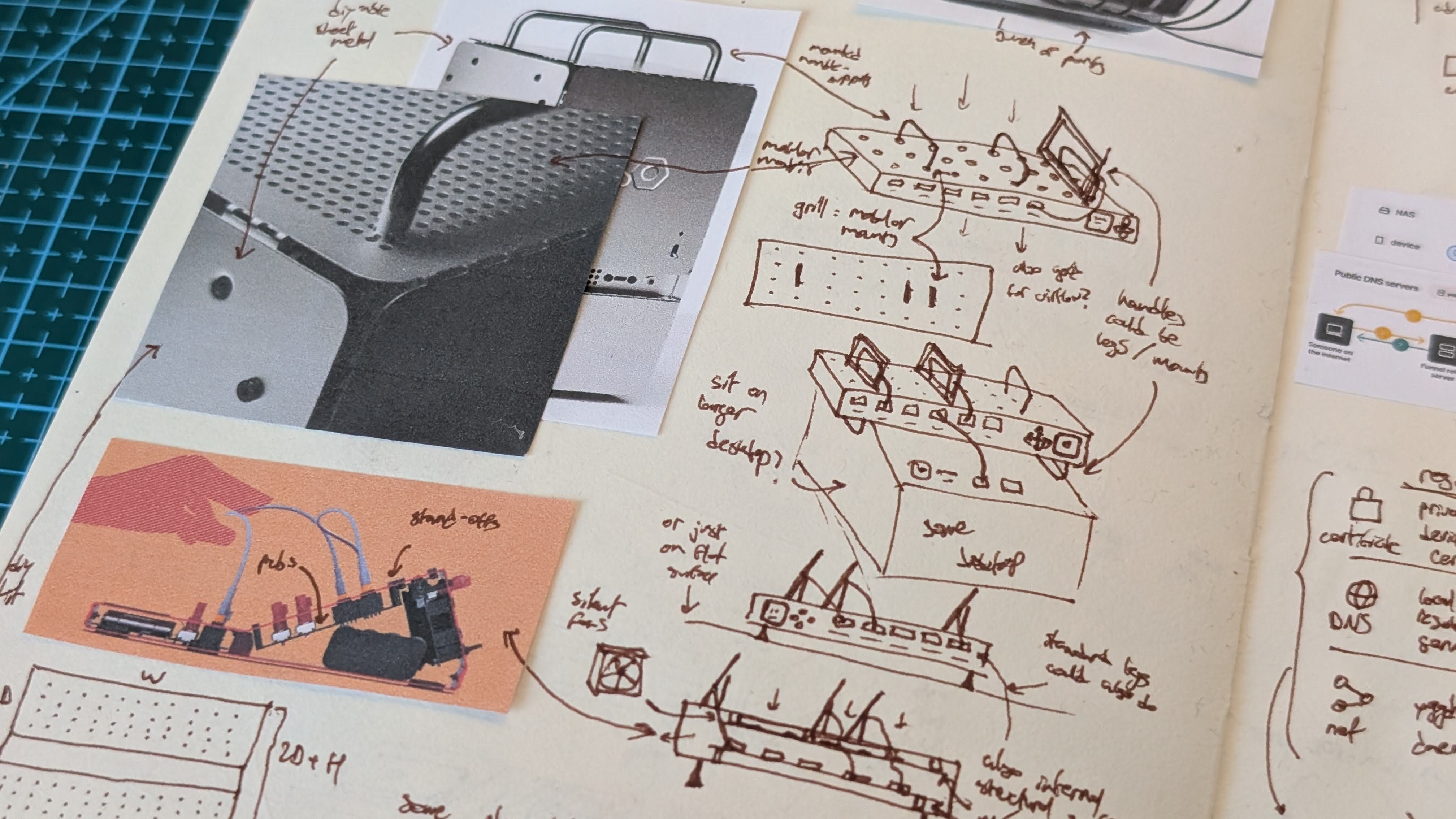
One option I’ve considered for the form factor of “little cloud” is that of a network-attached storage unit, or NAS. These typically house a bunch of HDDs or SSDs in neat little bays. The idea here was that you could slot in your old smartphones, tablets, and laptops into dedicated bays. The upside being that it would wrap the mess of different devices into a visually coherent system of matching containers.
However, there are quite a few downsides. First, each worker device would require its own bay, increasing the manufacturing costs of a product that is explicitly about reviving e-waste. Second, because smartphones, tablets, and laptops would require bays of different sizes, it would add friction to the process of integrating a patchwork of worker devices. Third, I don’t think wrapping each device into its own container is too useful for airflow and cooling.
stations
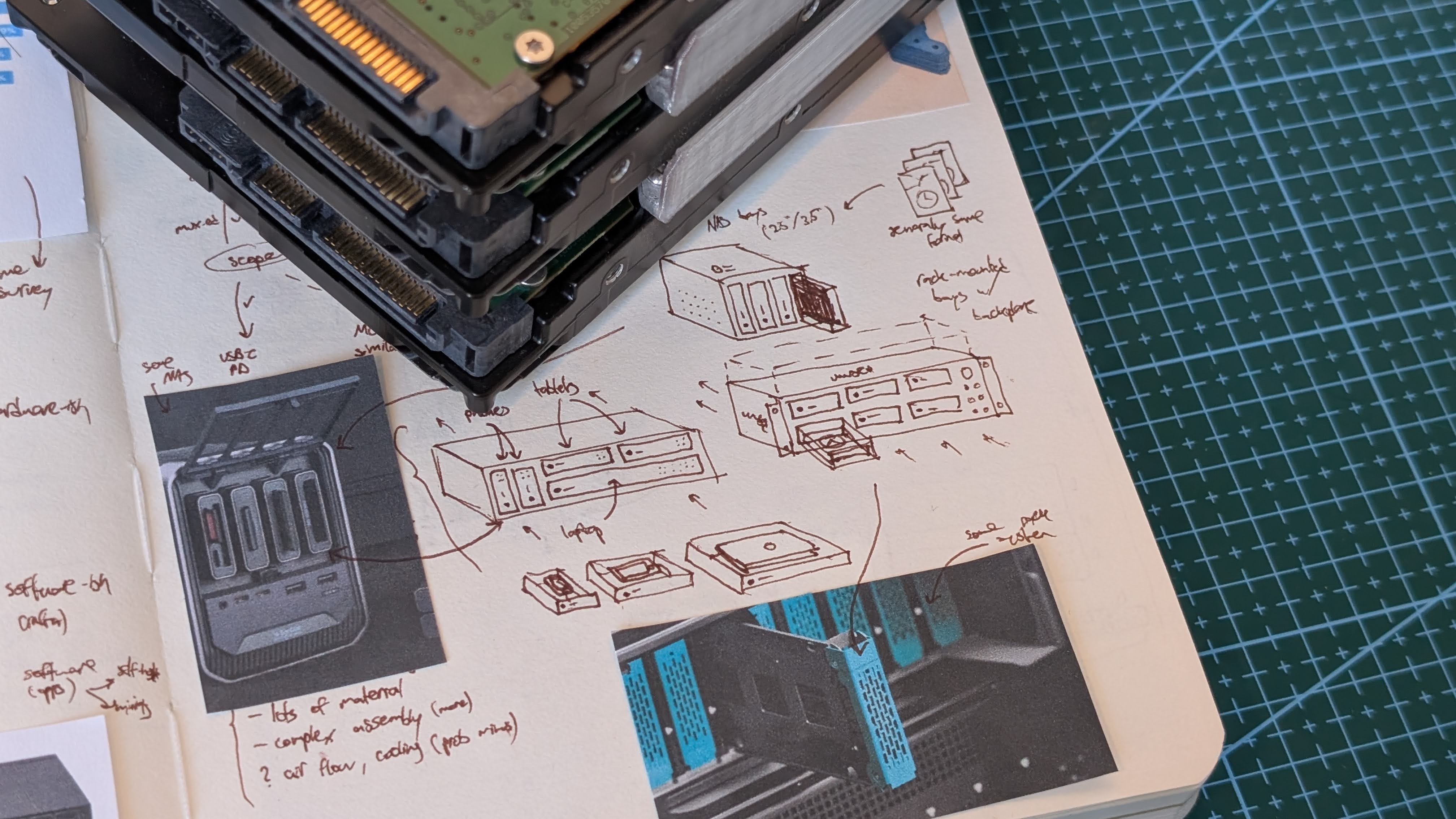
Another possible form factor would be the general category of charging stations, docks, and stands. Many of these are already trying to accommodate a range of consumer devices with different form factors, if you think about it. They also tend to have many ports, such that they can physically connect to each and every device, though newer ones lean into wireless charging.
In contrast to the bay systems, these charging stations are quite efficient in terms of material. Each device barely gets a flap to rest on. Because of that, they’re also not too prescriptive about exactly what kind of device you’re allowed to connect where.
When it comes to cooling, I’m not too sure. This would be a situation where the components that dissipate heat (i.e., the worker devices) would be somewhat outside of our device’s main enclosure, merely resting on top of it. Contrast this to desktop cases or rack-mounted servers, where the hot components are often in the middle of an air tunnel whose geometry has been carefully tuned. Exposing junk electronics right on top might also create some amount of visual clutter, though maybe at least cables could run down the back side.
racks
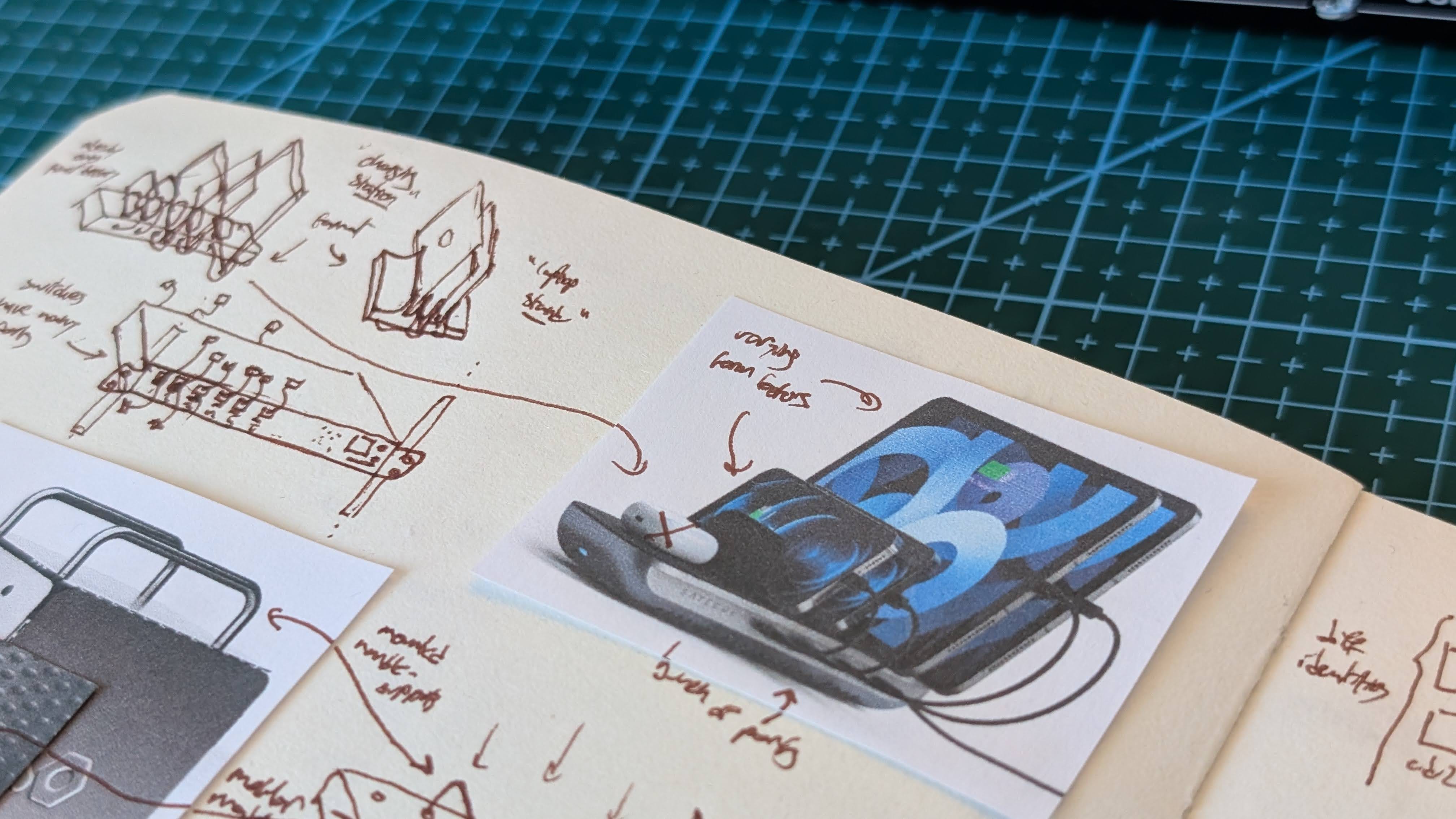
In the previous log entry, we emphasized the overlap in responsibility between little cloud and traditional enterprise equipment, such as network switches. Rack-mountable equipment has been optimized to allow for connectivity between densely packed devices. Accordingly, they tend to boast dozens of ports on their front and back panels, always accompanied by clear labels and grouped using visual cues.
It would be nice if little cloud adopted the general form of a charging station, but whose base housing happened to also be compatible with rack-mounted standards. This would allow it to be used at home by placing small consumer e-waste on top of it, but it would also allow it to be used in actual racks filled with enterprise e-waste.
The latter would make this product slot right into a related initiative I’m involved with, where we’re redirecting data center e-waste into high schools and universities for students to run their own local platforms on them. We’d get a unified plug-and-play device for reviving e-waste ranging from smartphone all the way to server caliber. That level of consolidation would be pretty sweet.
process
3D printing the enclosure won’t cut it, both because it doesn’t scale favorably with volume, but also because we might be dealing with quite a bit of power inside this enclosure. Typical filament isn’t really well-suited for this, and this would turn into a real liability during product safety certification. Injection molding is how plastic enclosures scale instead, but the upfront cost for a production run is prohibitive.
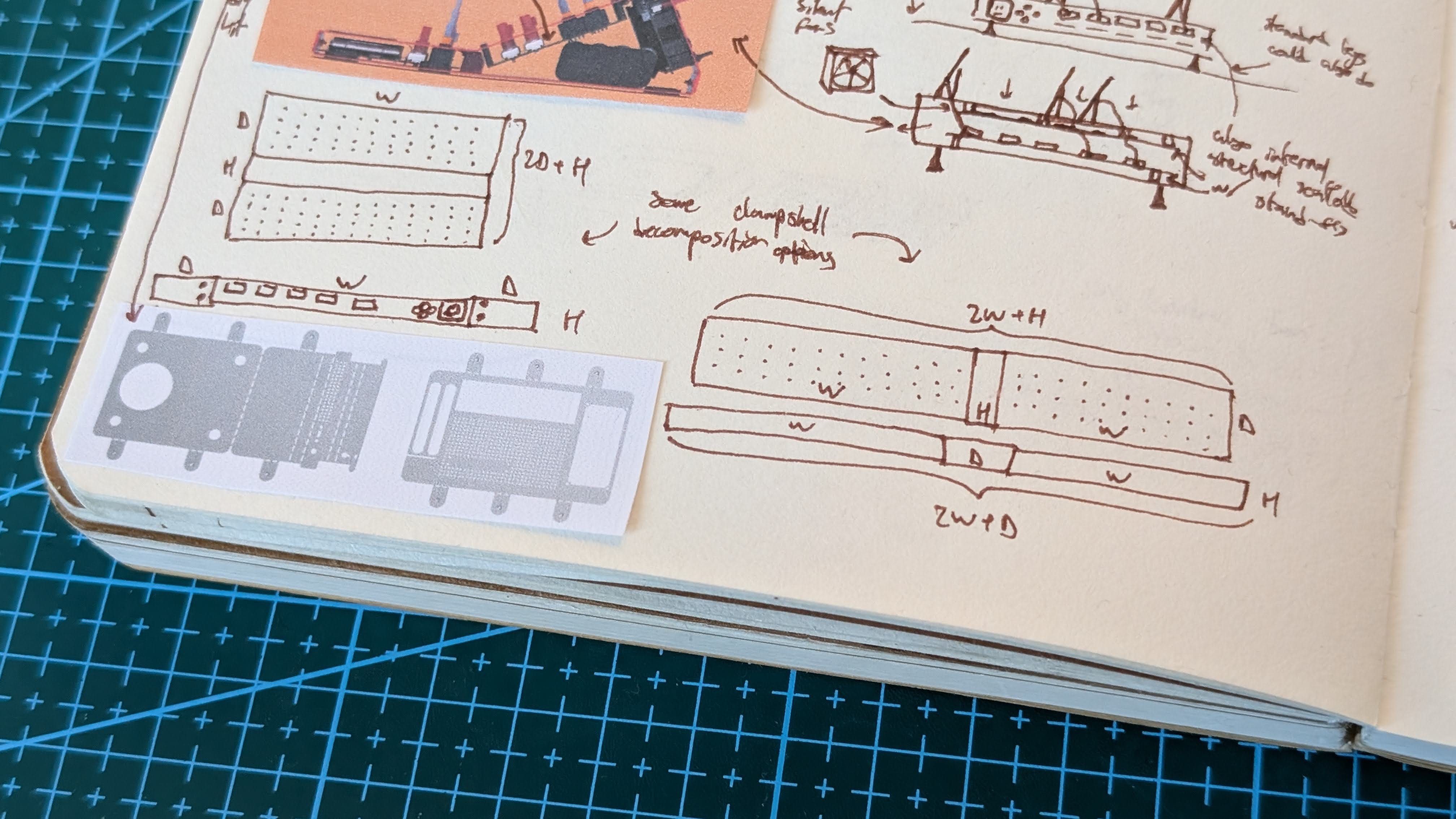
Sheet metal is quite interesting here, it’s a bit like folding cardboard but instead with aluminum or steel. Excellent thermal conductivity. Cheap to prototype, but also scales favorably with higher volumes. If our geometry boils down to a basic box with maybe some flaps and legs, then manufacturability wouldn’t be an issue. We don’t really need the ability of 3D printing to create intricate internal structures.
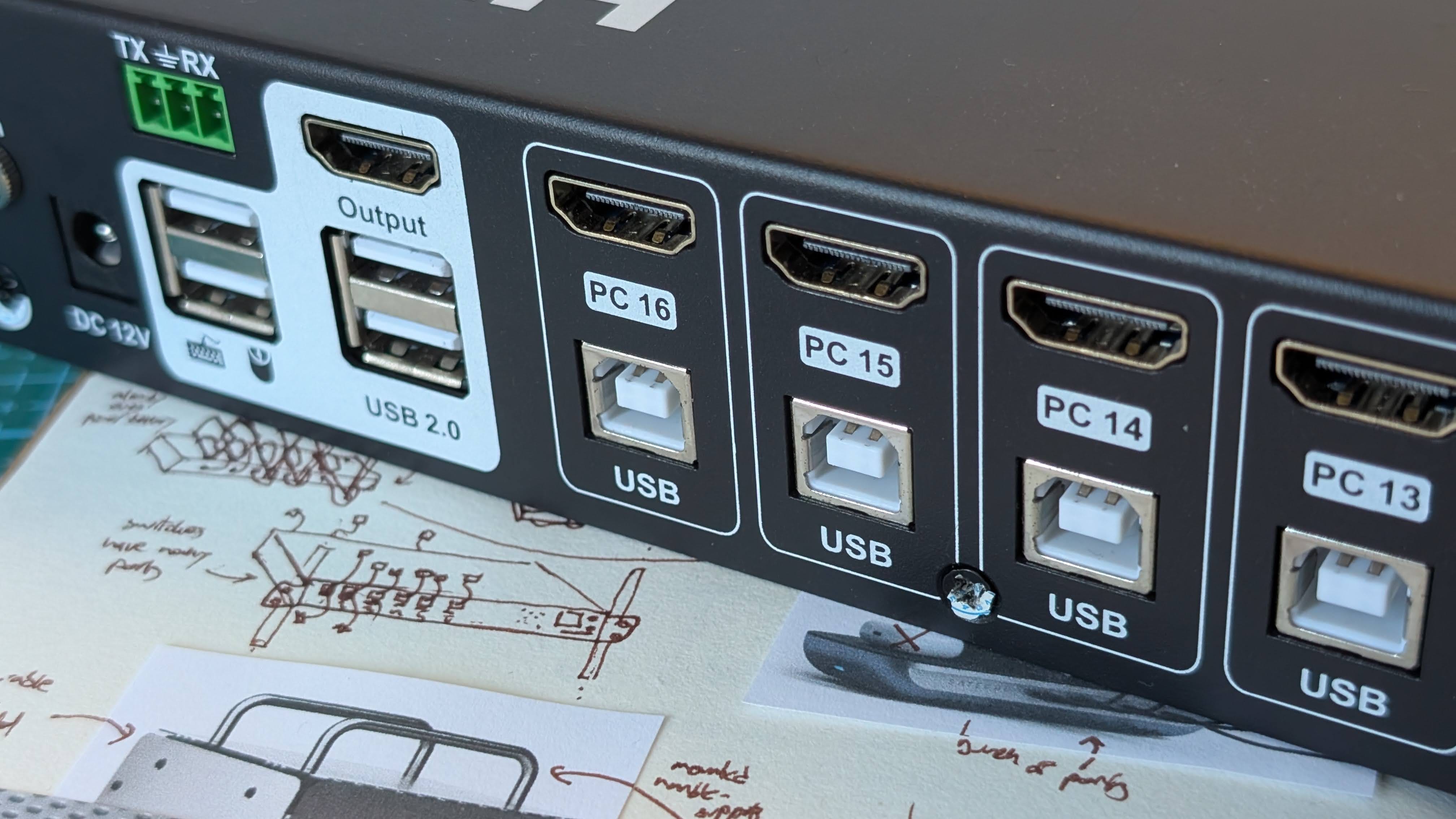
I found some fascinating precedents from Teenage Engineering that exploit the similarity between sheet metal and folding cardboard. Their computer-1 desktop case ships with metal sheets that they’ve cut with a CNC, but that they haven’t yet actually bent. The end-user is able to bend the sheets and screw them together, probably creating some degree of Ikea effect in the process. They did the same with their pocket operator modular series, they ship the flat sheets and call on the end-user for the final assembly. Such a DIY option might simplify manufacturing and delivery.
modularity
For computer-1, the top handles mount to a grill pattern drilled into the metal sheet. I think it was just a neat way for them to mount the handles without digging further holes outside the regular grid. However, think about what such geometry could enable in our case. You could move the flaps for worker devices around freely, depending on their unique shapes and sizes. You could also take them off entirely if doing a rack-mounted setup with servers only.
If mirrored on the bottom side, the hole matrix could also allow the legs to be adjusted. This could make little cloud sit well on either a flat surface or an old desktop that has been recruited into the cluster, as well. Internally, you could also mount stand-offs against the same grill to hold circuit boards, fans, and other components. Not to speak of the original purpose of the computer-1 grill, which was probably airflow.
Pulling these threads back together, we get to what looks like a somewhat large charging station built out of sheet metal, whose base enclosure happens to be rack-mountable. Its top and bottom sides are perforated to allow for flexible mounting options, while its front and back sides have clear labels that organize its many ports. Finally, it might be available in the form of a cheaper DIY kit that you assemble yourself.